
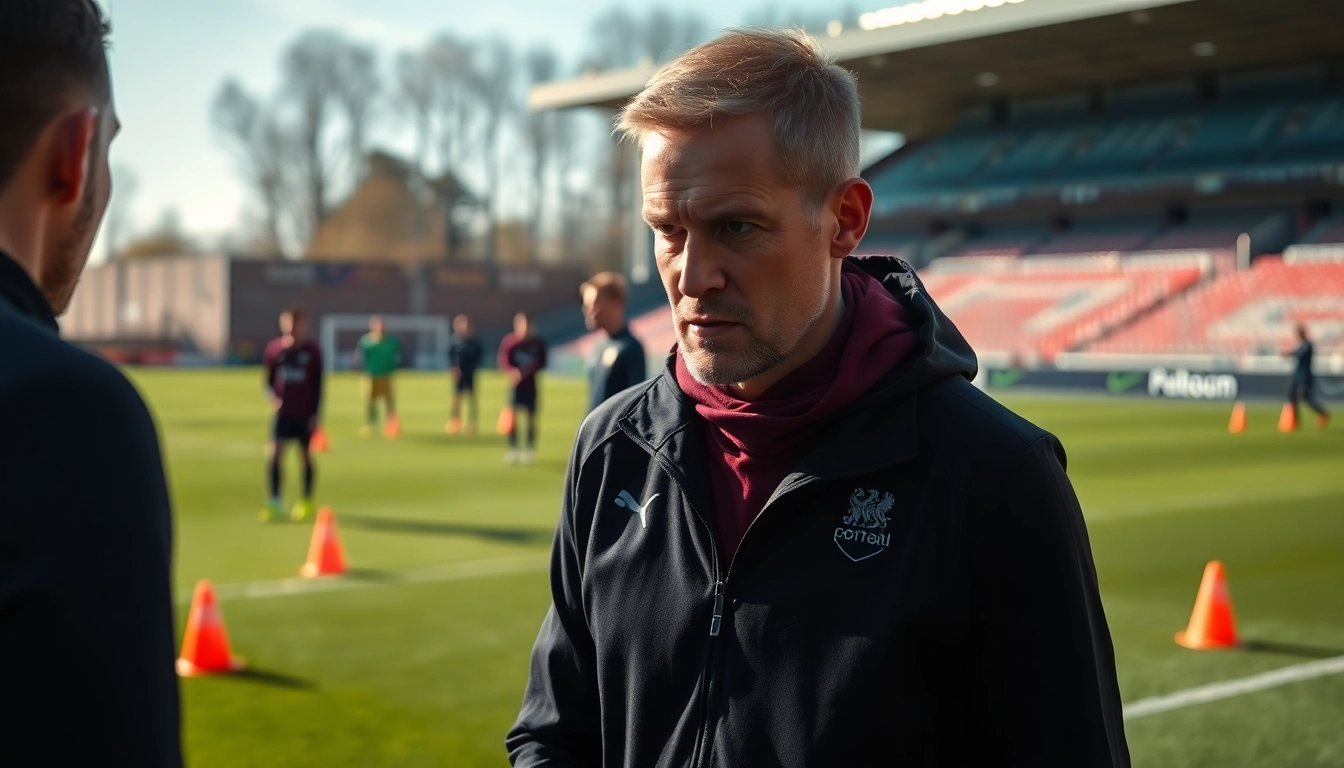
Introduction to the Sports Career of Sean Dyche
Sean Dyche is a name that resonates deeply within the world of football, particularly in English football. Known for his pragmatic approach both as a player and a manager, Dyche’s career embodies the relentless pursuit of excellence paired with a dedication to team dynamics. His journey from a professional player to a revered manager is marked by resilience, strategic acumen, and a commitment to fostering talent. In this article, we explore the intricate details of the sports career of Sean Dyche, delving into his early influences, playing days, managerial philosophy, and his overarching impact on football.
Early Life and Influences in Football
Born on June 28, 1971, in Kettering, Northamptonshire, Sean Dyche grew up in a family that appreciated sports. His early exposure to football came from his father, who played a significant role in nurturing his interest. Dyche was particularly influenced by the legendary Brian Clough and his approach to management and team-building, which would later inform Dyche’s own style as a coach. The seed for a career in football was planted early on, as Dyche participated in various local teams and youth programs, showcasing his potential from a young age.
Playing Career Path: Key Clubs and Highlights
Dyche’s professional playing career began when he signed with Nottingham Forest in 1989. He made his debut in the English Football League, showcasing his defensive prowess. Throughout his playing career, which lasted until 2007, he represented several clubs, including Bristol City, Luton Town, and Millwall. Notably, his tenure at Burnley as a player was characterized by strong performances, ultimately making him a fan favorite.
One highlight of his playing days was helping Luton Town secure promotion to the Premier League in 2005. His reliability as a center-back and leadership qualities earned him respect among teammates and coaches alike. Despite facing injuries that hindered parts of his career, Dyche’s work ethic and tenacity became benchmarks for younger players.
Sean Dyche as a Player: A Career Overview
Notable Playing Achievements and Statistics
During his playing career, Sean Dyche made over 300 professional appearances, a remarkable feat that reflects his longevity and consistency in a physically demanding sport. His statistical contributions included several crucial tackles, defensive interceptions, and leadership roles, which were integral in clinching significant victories for his teams. Despite not being a goalscoring defender, his presence on the pitch was felt through his organizational skills and ability to motivate. Furthermore, Dyche also frequently stepped into a captaincy role, amplifying his influence beyond numerical statistics.
Playing Style and Contributions on the Field
Dyche’s playing style was defined by his strong physical presence and tactical awareness. Playing primarily as a central defender, he exhibited qualities essential for a solid defensive unit. Dyche was adept at reading the game and positioning himself to intercept threats before they materialized. His aerial ability made him a formidable opponent during set-pieces, while his composure on the ball facilitated smoother transitions from defense to attack.
Beyond mere technical skills, Dyche’s contributions extended to team morale. He became known as a vocal leader who instilled confidence in younger players and served as a mentor, shaping some of the careers of those who played alongside him. His ethos of hard work and dedication became characteristics he would later instill in his teams as a manager.
Challenges Faced During Active Career
Like many athletes, Dyche’s career was not devoid of obstacles. Injuries plagued parts of his playing days, impacting his consistency and limiting his ability to play at times. Additionally, transitioning between clubs posed its own set of challenges, as he often had to adjust to different team dynamics and managerial styles. Yet, amid these challenges, Dyche’s resilience shone through. He approached each setback with determination, often using failures as lessons that would inform his future endeavors, both on and off the pitch.
Managerial Style: Tactics and Philosophy of Sean Dyche
Formation and Tactical Preferences
Transitioning into management in 2012, Sean Dyche brought with him a wealth of experience gained during his playing days. His tactical preferences often reflect a robust defensive structure, typically deploying a formation that emphasizes solidity at the back. The 4-4-2 formation has been a staple of Dyche’s approach, allowing him to create a well-organized team capable of absorbing pressure while maintaining an effective counter-attacking threat.
Dyche emphasizes the importance of teamwork and structure, fostering a system where every player understands their role within the larger framework. His training methods often incorporate drills focusing on defensive shape and set-pieces, highlighting his belief in these as fundamental aspects of competitive football.
Key Matches Reflecting His Strategy
Several key matches during Dyche’s managerial career exemplify his tactical acumen. Notably, the 2016-2017 season, in which Burnley secured a seventh-place finish in the Premier League, showcased Dyche’s effectiveness. Matches such as their remarkable home victory against Liverpool, where Dyche orchestrated a disciplined performance leading to a 2-0 win, underscored his capacity to galvanize players to execute his game plan effectively.
In cup competitions, his strategic prowess was also evident. Dyche’s Burnley famously progressed to the quarter-finals of the FA Cup in the 2018-2019 season, pulling off an upset against Manchester United at Old Trafford. Such performances not only testified to his tactical preparation but also reinforced his reputation in high-pressure scenarios.
Development of Young Talents Under His Watch
Dyche’s commitment to developing young talent is a hallmark of his managerial tenure. His experience as a player shapes his understanding of the pressures young athletes face. At Burnley, Dyche has been instrumental in promoting several academy products to the first team. Talents like Dwight McNeil have thrived under his guidance, improving their skills and contributing significantly to the team’s performance on the pitch.
Dyche employs a nurturing approach, often integrating young players into match-day squads and providing them with essential experiences. His willingness to trust young talents reflects not only a forward-thinking mindset but also a philosophy centered on sustainability and long-term growth.
Significant Achievements and Milestones
Recognition and Awards in Management
Throughout his managerial career, Sean Dyche has garnered various accolades recognizing his contributions to football. In 2016, he was awarded the Football Writers’ Association Football Manager of the Year award, spotlighting his remarkable achievement in guiding Burnley back to the Premier League after a single season in the Championship. Similarly, his nomination for the Premier League Manager of the Month on several occasions testifies to the respect he commands within the football community.
His impact was not just in terms of accolades but also in how he transformed Burnley into a competitive side in the Premier League, often exceeding expectations and showing glimpses of a team capable of defying odds.
Impact on Team Performance and Culture
Dyche’s influence extends beyond wins and losses; he has cultivated a culture of resilience and hard work at Burnley. His mantra of “no-nonsense football” resonates within the dressing room, fostering a sense of identity and unity among players. This culture has been pivotal in moments where the club faced relegation battles, instilling belief that they could overcome adversity.
Additionally, his approach to player welfare emphasizes mental fortitude, preparing players not just physically but mentally for the rigors of top-flight football. The team spirit he has fostered is often cited as a key factor in their competitive edge, enabling players to rise to challenges collectively.
Fan Reactions and Public Perception
Public perception of Dyche reflects a combination of admiration, respect, and loyalty from fans and pundits alike. The Burnley faithful regard him as a transformative figure who led the club through various phases of growth and stability. His ability to connect with supporters has resonated deeply, particularly in terms of how he embodies the ethos of the club. Fans appreciate his straightforward demeanor and tactical insights, viewing him as a manager who understands the fabric of the club and its supporters.
Moreover, discussions regarding his future often highlight his integrity and dedication to the sport, suggesting that Dyche’s impact on English football may extend beyond his time as a manager, creating a lasting legacy.
The Future of Sean Dyche in Football
Challenges Ahead: Upcoming Seasons
Looking ahead, Dyche finds himself at a pivotal juncture in his career. Managing in the Premier League comes with an ever-evolving landscape, where tactical adaptability is crucial. The challenges of sustaining performance while competing against clubs with greater resources are significant. With Burnley vying to establish themselves in the top half of the table, Dyche must navigate these challenges tactfully, continuing to motivate his squad amidst fluctuating performance levels and external pressures.
The footballing world remains dynamic, with a constant influx of emerging talent and shifting strategies, necessitating that Dyche remains open to innovation while staying true to his foundational principles.
Potential Clubs and Career Opportunities
As Dyche’s reputation grows, speculation around potential future roles continues to swirl within football circles. Given his proven track record, numerous clubs at various levels across the league may consider him a top choice for managerial vacancies. His ability to develop players and establish a cohesive team philosophy makes him an attractive prospect for clubs looking to build for the future. Moreover, if the opportunity arises, a return to a club where he once played could add another layer to his career narrative.
Legacy: How He Will Be Remembered in Football
Ultimately, Sean Dyche’s legacy in football will be characterized by his commitment, resilience, and transformative impact on the clubs he has managed. His reputation as an astute tactician and a nurturing manager of young talent sets him apart in a competitive field. As he continues to navigate the rigors of football management, Dyche’s story is one of passion—a testament to the belief that hard work and dedication pave the way for success. Football enthusiasts will likely remember him as a manager who not only understood the tactical nuances of the game but also fostered a sense of community and belonging among his players and fans alike.